

|
||||||||||||
|
||||||||||||
|
||||||||||||
|
One employee struggles to concentrate in an open-plan office. Another finds vague verbal instructions difficult to retain. Someone else performs brilliantly with uninterrupted time but becomes overwhelmed by constant task-switching. A manager may see people who need to "cope better". Occupational Health may see functional needs. HR may see reasonable adjustments. The employees may simply be thinking: "I know I can do this job. I just cannot seem to do it this way." In Edition 001, we asked whether healthcare could adopt technology at speed without allowing safety, inclusion and human judgement to become afterthoughts. In this edition, we turn that question towards work. The future workplace will not be less digital. Our challenge is to make sure it remains human enough for different kinds of humans to succeed within it. |
||||||||||||
|
||||||||||||
|
🧠 The Neuroinclusive Future of Work
|
||||||||||||
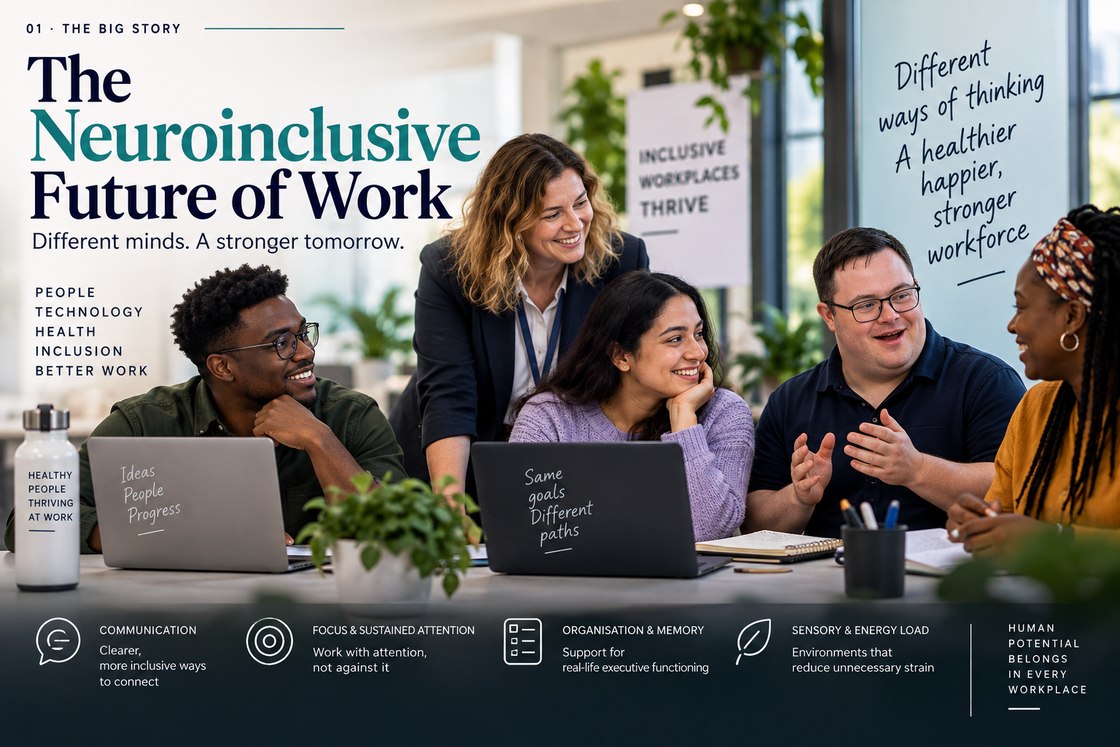
Illustration AI-generated editorial visual representing a neuroinclusive workplace. |
||||||||||||
|
Reasonable adjustments are important. But they are not the whole answer. Imagine two employees. Both have ADHD. One needs written priorities and uninterrupted concentration time. The other thrives in a fast-moving environment but struggles with long administrative tasks. Giving both exactly the same "ADHD adjustments" would make little sense. The same is true for autistic employees, people with dyslexia, anxiety, chronic pain, menopause, sensory sensitivities or other functional needs. A diagnostic label may tell us something. It rarely tells us everything about how that individual functions within a particular job and environment. |
||||||||||||
|
||||||||||||
|
That shift moves the conversation from label to function — and from generic adjustments to the interaction between the person, the task and the environment. |
||||||||||||
|
||||||||||||
|
02 · 🇬🇧 NHS Watch
Clinical-safety standards are being reconsidered for a much more complex digital NHS
The NHS clinical-risk-management standards DCB0129 and DCB0160 establish responsibilities for manufacturers and deploying organisations when digital technology could affect patient safety. Healthcare technology has changed dramatically: AI-supported decisions, machine learning, voice recognition, continuous updates and large language models can all introduce new forms of risk. NHS England's national review sought practical feedback from people who use the standards, with the response window closing on 11 September 2026. |
||||||||||||
Read source: NHS England — national review of DCB0129 and DCB0160 · response window closes 11 September 2026 → |
||||||||||||
|
03 · 🧠 AI at Work
AI can act as a cognitive scaffold. It can also become another source of cognitive overload.
|
||||||||||||
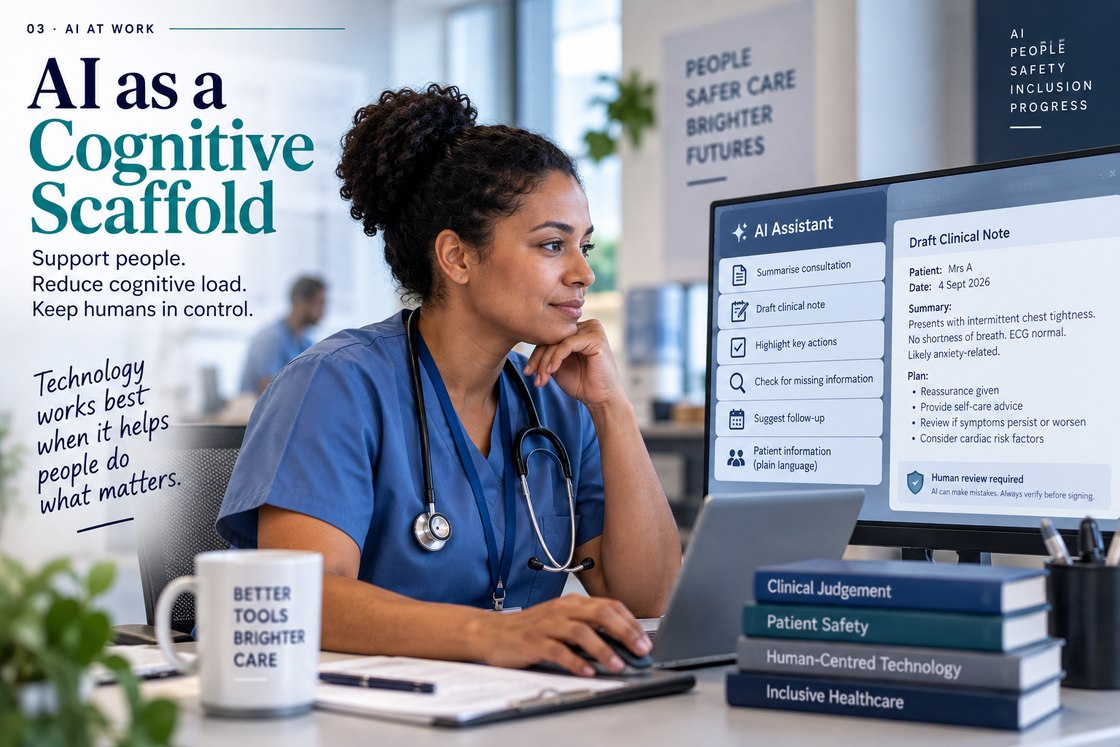
Illustration Concept visual showing AI assisting a clinician. Not a real product or clinical interface. |
||||||||||||
|
Many workplace AI products promise to reduce administrative friction: draft this email, summarise that meeting, organise these notes, create a checklist, remind me what I have forgotten. For somebody who struggles with executive functioning, that can be extremely useful. A vague instruction such as "Prepare the monthly governance update" can become a clear sequence of actions. |
||||||||||||
|
||||||||||||
|
||||||||||||
|
04 · 🛡️ The Assurance Desk
Verification is becoming a clinical-safety control
|
||||||||||||
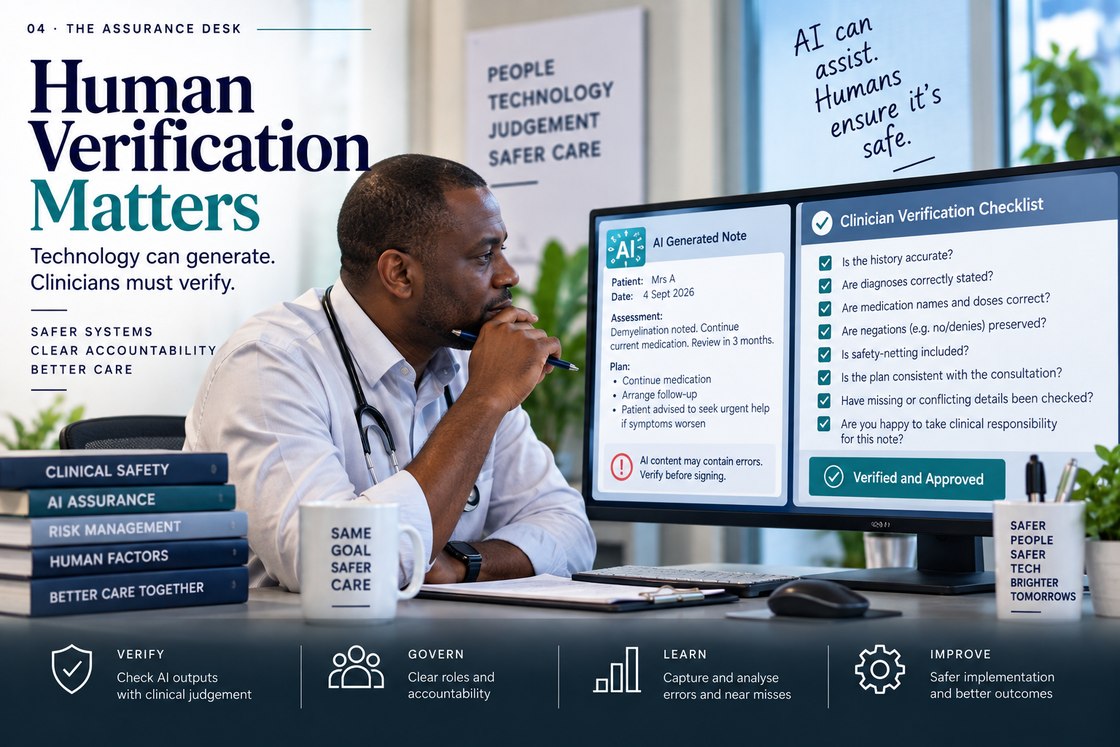
Illustration Concept visual showing clinician verification of AI-generated content. |
||||||||||||
|
Recent Healthwatch evidence returned to national attention after reports of ambient AI scribes confusing medicine names, omitting information and reversing meaning. In the underlying work, 69% of respondents said they would feel more comfortable if clinicians committed to checking AI-generated content. AI often produces text that looks fluent. That can create an illusion of reliability. But a dropped "no" or "not" can reverse clinical meaning. A medicine name that sounds plausible may still be wrong. A polished note can still be unsafe. |
||||||||||||
Read source: Healthwatch England — public views on AI scribes · 16 July 2026 · The Next Web — "AI scribes are getting drug names and diagnoses wrong" · 31 August 2026 → |
||||||||||||
Read source: MHRA Drug Safety Update — parenteral nutrition filters · 2 September 2026 → |
||||||||||||
|
05 · 🌍 World
|
||||||||||||
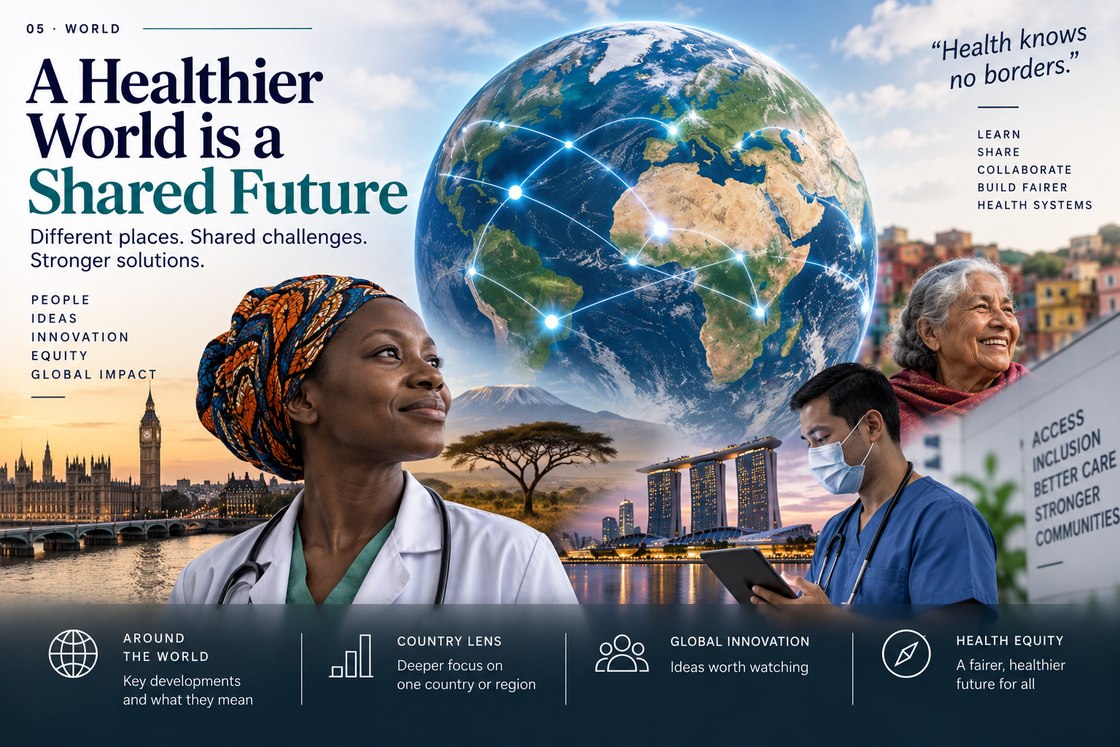
Illustration Editorial montage representing global health, innovation, equity and collaboration. |
||||||||||||
|
||||||||||||
|
Sources: Wang et al., "Generative AI versus registered nurses in discharge planning" · Nursing Open, 2026 · Dubucs et al., "Geriatrician telephone support for emergency medical dispatchers" · European Geriatric Medicine, 2026 → |
||||||||||||
|
🇫🇮 Country Lens — Finland
What can integrated digital records teach us about reducing cognitive burden?
|
||||||||||||
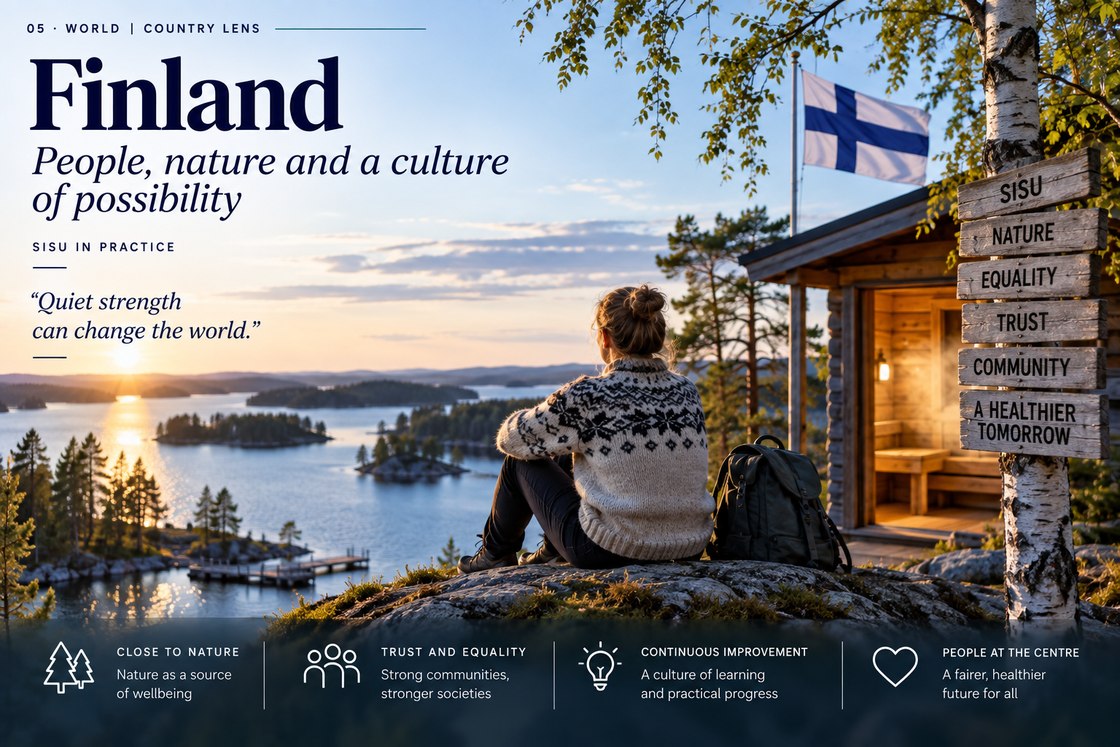
Illustration Editorial representation of Finnish culture, nature, trust, equality and sisu. |
||||||||||||
|
Finland offers an interesting contrast to fragmented digital-health environments. Its national Kanta infrastructure allows people to access health information through MyKanta, bringing together records, prescriptions, laboratory information and other healthcare data. The broader lesson is not that every country should copy Finland. Healthcare systems differ. But integration matters because fragmentation creates cognitive work. |
||||||||||||
|
||||||||||||
|
||||||||||||
|
Reference: Finland's Kanta Services and MyKanta national digital-health infrastructure → |
||||||||||||
|
06 · 🇫🇮 Wisdom Without Borders
Edition 002 · Finland
Sisu
There is no perfect one-word English translation of the Finnish idea of sisu. It is often associated with determination, courage, endurance and continuing through adversity. But organisations can romanticise resilience. Sometimes "You need to be more resilient" really means: "We are not going to change the environment that keeps exhausting you." |
||||||||||||
|
||||||||||||
|
07 · 📊 The Mosaic Data Desk
Five numbers worth remembering
Numbers are useful. But the most important number is often the one we do not yet have: how much human potential is lost because work is designed around one narrow model of how people should think, communicate and organise themselves?
Data sources include Healthwatch, the NHS England DCB0129/DCB0160 review and the European geriatric telephone-support evaluation → |
||||||||||||
|
08 · People & Society
🎤 People of the Mosaic — Whose Perspective Should We Hear Next?
|
||||||||||||
|
People of the Mosaic meets the people behind healthcare and workplace change — not simply their job titles, but what they see, what concerns them and what they believe needs to change. For this edition's neuroinclusive workplace theme, we are inviting nominations for: |
||||||||||||
|
||||||||||||
|
Four questions we want to ask
01 What do organisations misunderstand most about neuroinclusion? 02 What makes a workplace adjustment genuinely useful rather than performative? 03 Where do employees most often become stuck between HR, management and Occupational Health? 04 What is one thing you would redesign about the modern workplace? |
||||||||||||
|
Not celebrity. Not hierarchy. Perspective.
|
||||||||||||
|
🧩 Inclusion Corner
Equality does not always mean giving everybody the same thing. The objective at work is not to make everyone's working environment identical. It is to create reasonable conditions in which people can perform the essential requirements of their role. |
||||||||||||
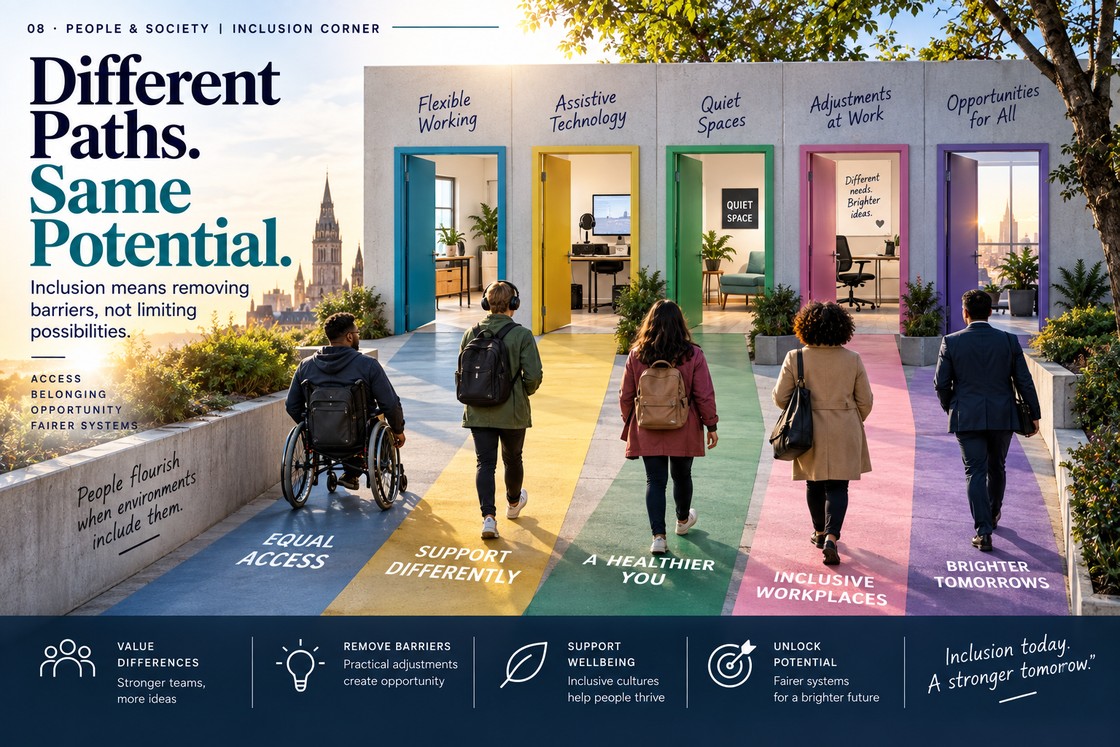
Illustration Editorial visual representing different routes to inclusion, equal access and equitable workplace support. |
||||||||||||
|
A policy is not an adjustment
Neuroinclusion cannot live only in an HR policy, a mandatory e-learning module or an awareness-week post. The test is what happens when an employee says: |
||||||||||||
|
||||||||||||
|
Does the manager know what to do next? Is there a clear pathway to workplace assessment? Can Occupational Health understand the functional impact? Is the recommendation practical? Does anyone come back later to ask whether it helped? The stronger organisation designs for different routes to the same outcome. |
||||||||||||
|
09 · 💡 Built at SDHA
Allo Workplace
Can functional-needs assessment become simpler, earlier and more useful?
One of the ideas behind Allo Workplace is that workplace support can begin with function rather than diagnosis. |
||||||||||||
|
||||||||||||
|
||||||||||||
|
The pathway
1 Employee voice 2 Functional need and impact 3 Workplace context 4 Possible adjustments 5 Professional review where appropriate 6 Shared decision · implementation · review |
||||||||||||
|
The last word matters: review. An adjustment is not successful because it was recommended. It is successful if it helped. |
||||||||||||
|
||||||||||||
|
||||||||||||
|
🤝 The Collaboration Desk
|
||||||||||||
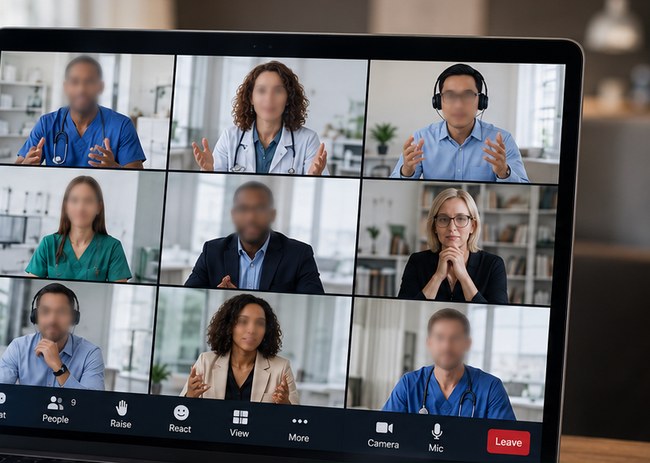
Illustration Posed video-call scene — not a photograph of a specific CIN meeting. The Clinical Innovation Network itself is a real, active SDHA programme. |
||||||||||||
|
||||||||||||
|
🌐 The World in One Minute
Before you leave, five things worth watching:
|
||||||||||||
|
☕ Before You Go
Perhaps one of the biggest mistakes organisations make is assuming that inclusion means helping people fit into existing systems. Sometimes the system itself deserves scrutiny. Why must instructions be verbal? Why are there six places to find one piece of information? Why does someone have to disclose a diagnosis before anybody asks what they need? Why does an AI system produce more information than a human can realistically verify? |
||||||||||||
|
||||||||||||
|
See you in a fortnight. |
||||||||||||
|
||||||||||||
|
Share the Mosaic
Enjoyed this edition? Forward it to someone working in healthcare, workplace health, HR, Occupational Health, neurodiversity, digital health, patient safety, AI, research, policy or innovation.
|
||||||||||||
|
Editorial areas: Global Health · NHS · Digital Health · AI · Robotics · Clinical Safety · Regulation · Workforce · Neurodiversity · Culture · Health Equity · Innovation · Research · Business of Health Disclaimer: The Health Mosaic is an independent educational and informational publication produced by Sapphire Digital Health Advisory Ltd. Content is provided for general information and discussion and does not constitute medical, clinical, occupational-health, legal, regulatory, financial or investment advice. References to particular organisations, technologies or products do not necessarily constitute endorsement. Healthcare organisations and professionals should undertake appropriate clinical, regulatory, technical, employment, equality, information-governance, procurement and legal assessment relevant to their circumstances before acting upon information discussed in this publication. Healthcare technology, regulation and policy change rapidly; information is presented according to the best available sources at the time of publication. Some images in this edition are AI-generated or illustrative concept visualisations and do not depict real events, patients or products. You are receiving this publication because you subscribed through an SDHA subscription route. We want The Health Mosaic to be useful — not another unwanted email. Manage preferences | Unsubscribe | Privacy Policy | Contact us © 2026 Sapphire Digital Health Advisory Ltd. All rights reserved. |
||||||||||||
Related Articles


About Us
The infrastructure layer that makes UK and global digital health work. Clinical authority meets digital innovation.