

|
|||||||||||
|
|||||||||||
|
|||||||||||
|
Why Mosaic? Because healthcare has never been just about medicine. It is shaped by technology, culture, language, economics, regulation, geography, education, trust, politics, family, disability, work and — most importantly — people. A healthcare system in London does not operate in exactly the same way as one in Lagos. A technology that works beautifully in Singapore may need to be redesigned for rural Kenya. An AI tool that appears efficient to an engineer may feel inaccessible to an older person, a neurodivergent patient or someone who does not speak the language in which it was designed. And a clinical system can be technically impressive while still being unsafe. That is why this publication exists. The Health Mosaic is not simply a collection of links. Every week, we will ask: what happened? Why does it matter? Who could be left behind? What does the evidence tell us? What should healthcare leaders do differently? And occasionally — what can an old proverb teach us about a very modern problem? This week, artificial intelligence dominates our front page. The NHS is accelerating its use of AI. Ambient voice technology is moving quickly into clinical practice. AI-assisted triage is coming into the NHS App. Globally, technology companies are moving deeper into medicines development. Robotics is evolving alongside artificial intelligence. Exciting? Absolutely. But the question we will return to repeatedly in The Health Mosaic is this: can healthcare adopt technology at speed without allowing safety, inclusion and human judgement to become afterthoughts? |
|||||||||||
|
|||||||||||
|
🤖 The NHS is no longer experimenting with AI at the edges
|
|||||||||||
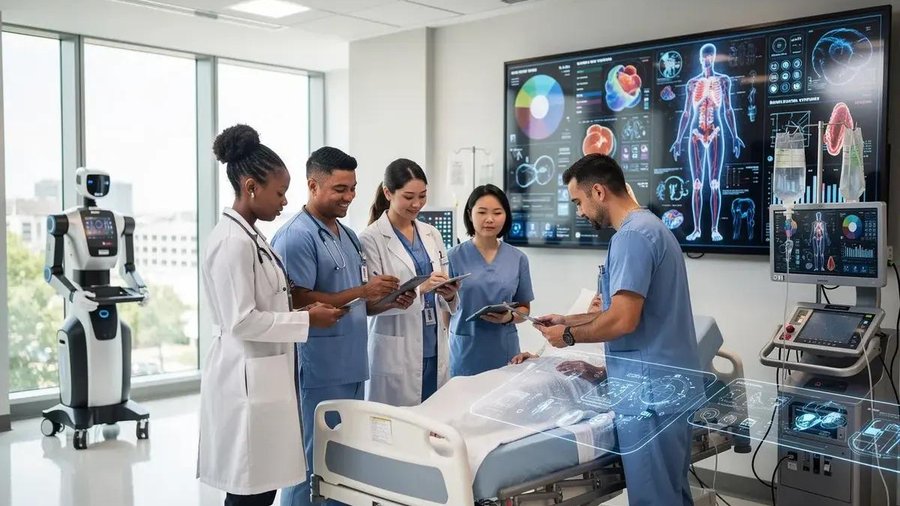
Illustration AI-generated for editorial use. Does not depict a real NHS setting or event. |
|||||||||||
|
Something important is happening in the NHS. Artificial intelligence is gradually moving from isolated pilots into mainstream infrastructure. NHS England has announced a major acceleration of AI and digital adoption, backed by £10 billion in technology, digital and data investment over three years. One of the headline developments is an AI-assisted triage capability within the NHS App. The aim sounds simple: a patient describes what is wrong, the system asks further questions, and it helps determine whether the most appropriate destination is a GP, pharmacy, emergency department, community service or self-care. The initial rollout is intended to reach more than 200,000 patients within 12 months, with wider NHS App availability planned later. NHS England says an earlier GP-practice trial was associated with a 29% reduction in people queuing on the telephone. |
|||||||||||
|
|||||||||||
|
Read source: NHS England — "NHS accelerates artificial intelligence rollout" → |
|||||||||||
|
|||||||||||
|
|||||||||||
|
Who evaluated it? How often is it reassessed? What happens when the software changes after approval? Healthcare increasingly needs systems capable of governing dynamic technology, not just static medical devices. That's ultimately a leadership and workforce-design question as much as a technical one: technology creates capacity for those 43 minutes — leaders decide what happens to it. Read source: UKAuthority — "AI triage tool bolsters role of NHS App" · NHS England — Copilot rollout → |
|||||||||||
|
03 · 🎙️ The AI Scribe Has Arrived
Ambient voice technology sounds simple. It isn't.
Imagine a consultation. The patient talks, the clinician listens — and artificial intelligence listens too. At the end, a draft clinical note appears. This is ambient voice technology, sometimes called ambient AI or AI scribing. The attraction is obvious: clinicians spend enormous amounts of time documenting consultations. If technology reduces that burden, clinicians may spend more time looking at the patient rather than the computer. But there is an important regulatory distinction. A tool that merely converts speech into text is one thing. A system that interprets the conversation, extracts clinical concepts, summarises risk or recommends actions is something different — which is why the MHRA and NHS England have issued specific guidance on how medical-device regulation can apply to ambient voice products. |
|||||||||||

Illustration The on-screen interface is a concept mock-up, not a real product. |
|||||||||||
Read source: GOV.UK / MHRA — "MHRA clarifies regulatory status of ambient voice technologies" → |
|||||||||||
|
04 · 🛡️ The Assurance Desk
Clinical safety in plain English: "The AI got it right 95% of the time."
That sentence sounds reassuring. But imagine a bridge engineer telling you: "This bridge works properly 95% of the time." Would you drive across it? Probably not — you would want more information. Healthcare AI deserves the same thinking. If an algorithm is "95% accurate", we still have to ask: 95% of what? Which population, which hospital, which disease, which age group, which language, which ethnicity, which clinical environment? And critically — what happened in the other 5%? Were those harmless errors, or exactly the patients we could least afford to miss? |
|||||||||||
That includes clinical risk management, human oversight, safety evidence, incident monitoring, bias assessment, cybersecurity, data quality, usability, model drift, accountability and post-deployment monitoring. AI assurance should not be a document completed before deployment and forgotten — it should be a continuous process. |
|||||||||||
Read source: MHRA — August 2026 Safety Roundup (PDF) → |
|||||||||||
|
|||||||||||
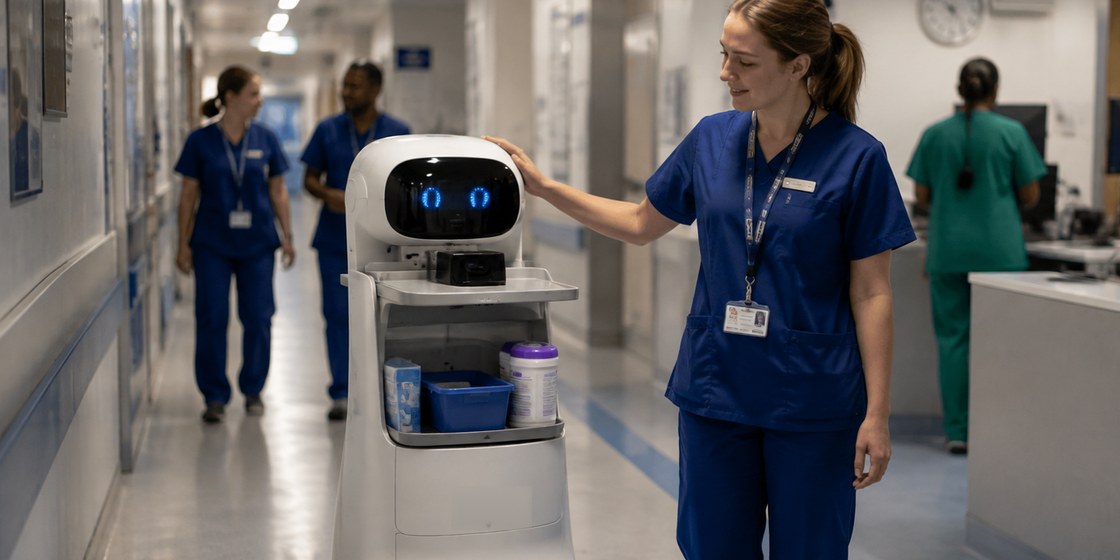
Illustration Illustrative AI-generated image depicting human–robot collaboration in a hospital environment. It does not document a real NHS deployment. |
|||||||||||
|
Read source: "Huawei plans for more AI pharma tie-ups" · "Robot Brains Could Have Their 'ChatGPT Moment' by 2027" → |
|||||||||||
|
🌏 Country Lens — India
What can the world learn from designing digital health at enormous scale?
|
|||||||||||
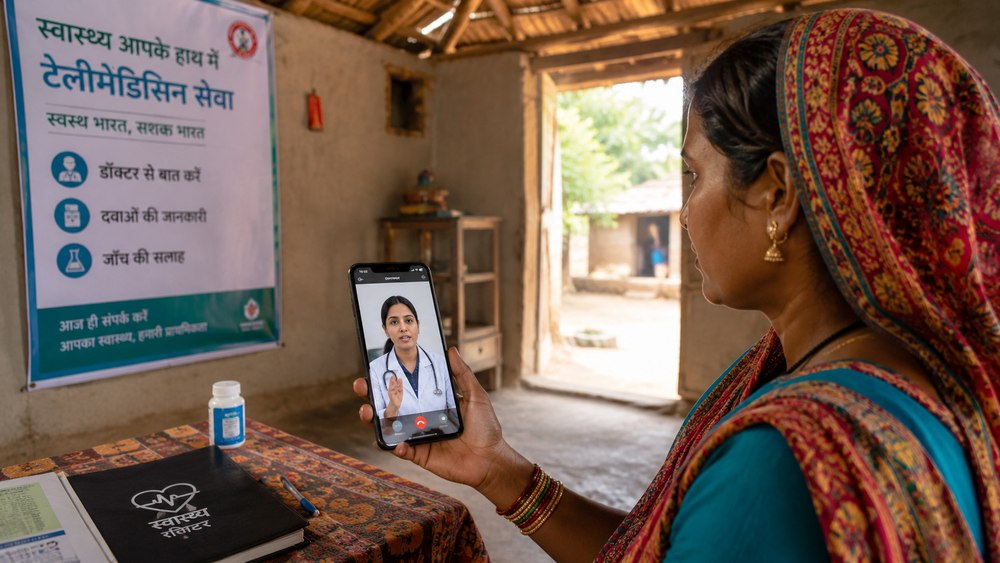
Illustration Representative of telemedicine access in rural India, not a specific documented case. |
|||||||||||
|
Healthcare innovation tends to attract headlines when a new device is invented. But some of the most consequential innovation is much less glamorous: identity, records, standards, interoperability, payments, APIs, consent infrastructure. These are the digital rails on which thousands of future applications can run. India's Ayushman Bharat Digital Mission provides an important example of trying to build health infrastructure at population scale. The lesson for other countries is not to simply copy India — healthcare systems differ enormously. |
|||||||||||
|
|||||||||||
|
Nobody had to rebuild the internet every time somebody created a website. Healthcare often still behaves differently — a new technology arrives, another integration is built, another database, another identity system, another silo. The countries that solve the infrastructure problem may create the conditions where innovation becomes substantially easier. Read source: Digital India — Ayushman Bharat Digital Mission → |
|||||||||||
|
06 · 📊 The Mosaic Data Desk
Five numbers worth remembering
There is an important connection between these figures: healthcare is trying to digitise while simultaneously managing extraordinary demand. That is why the business case for technology cannot simply be "it is innovative." It increasingly has to answer: what meaningful pressure does this remove? Read source: NHS England — AI rollout announcement · NHS England — July 2026 A&E demand → |
|||||||||||

|
|||||||||||
|
Illustration Representative of community life in Southern Africa, not a specific documented family. |
|||||||||||
|
07 · 🌍 Wisdom Without Borders
Edition 001 · Southern Africa
Ubuntu — "I am because we are."
Ubuntu is deeper than a slogan. It reflects an understanding that human identity is connected to relationships and community. So what does that have to do with AI? Quite a lot. Technology projects sometimes begin: "We have built something brilliant — how do we persuade people to use it?" Ubuntu suggests reversing the sequence. Start with who is affected, then ask what they need — patients, clinicians, carers, receptionists, managers, people with disabilities, people who speak other languages, people who distrust technology, people without smartphones, safety specialists, IT teams, families, communities. Then build. |
|||||||||||
|
|||||||||||
|
Each edition of The Health Mosaic carries its own cultural identity. Coming next: Sisu (Finland), Kaizen (Japan), Vasudhaiva Kutumbakam (India), a Yoruba proverb, and wisdom from the wider Arab world. |
|||||||||||
|
08 · 🎤 People of the Mosaic
|
|||||||||||
|
|||||||||||
|
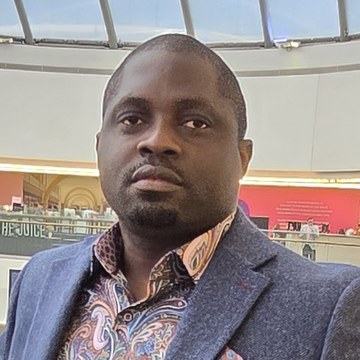
People of the Mosaic is where we meet the people behind healthcare change — not simply their job titles, but what they see, what concerns them, what they are learning and what they believe needs to change. For our first edition, we begin with the editor of The Health Mosaic. |
|||||||||||
|
01 What does healthcare transformation actually look like from your desk?
It looks much less glamorous than the word innovation sometimes suggests. In clinical practice, transformation is happening while somebody is waiting to be assessed, while a clinician is trying to find the right information, while teams are managing increasing demand, and while another digital system is being introduced into an already complicated workflow. From my clinical governance perspective, I also see the other side of innovation: incidents, risk, clinical pathways, variation, accountability and the practical work needed to make change safe. That has shaped how I think about technology. The best digital product is not necessarily the one with the most impressive technology. It is the one that solves a meaningful problem without creating a more dangerous one somewhere else. |
|||||||||||
|
02 What worries you most about the speed of AI adoption in healthcare?
Not AI itself. What concerns me is the possibility that adoption moves faster than understanding. We can become very excited by accuracy percentages, time savings and impressive demonstrations. But healthcare has to ask another set of questions: who was the system tested on? Who might it work less well for? What happens when it is wrong? Can the clinician recognise that it is wrong? Who is monitoring it after deployment? And who is accountable when an AI-supported decision contributes to harm? AI can create enormous value in healthcare, but clinical safety and assurance cannot be something we add after the technology has already entered the workflow. Innovation and assurance need to travel together. |
|||||||||||
|
03 What experience has most influenced how you think about digital inclusion?
Working with patients. Healthcare constantly reminds you that people do not experience the same system in the same way. A process that is straightforward for one patient may be extraordinarily difficult for another because of language, cognition, disability, neurodivergence, health literacy, culture, technology access or simply what is happening in their life that day. My interest in neurodiversity has strengthened that thinking. Sometimes the problem is not that a person is unable to function. The problem is that the environment has been designed around a very narrow idea of how people are expected to communicate, remember, organise, process information or ask for help. The same principle applies to digital health. If we design only for the easiest user, we may unintentionally build exclusion into the system. |
|||||||||||
|
04 If you could change one thing about how healthcare innovation is developed, what would it be?
I would bring the different voices into the room earlier. Not when the product is finished. Not when the organisation is ready to deploy. Earlier. Bring together the clinician who will use it. The patient who will experience it. The Clinical Safety Officer who will challenge it. The nurse who understands the workflow. The IT team who has to integrate it. The governance team. The person with lived experience. The researcher. The developer. And the person whose needs are usually discovered only after the system has already been designed. That does not make innovation slower. Done well, it prevents us from spending enormous amounts of time solving problems that could have been identified at the beginning. Perhaps that is also the idea behind The Health Mosaic. No single person holds the whole picture. Healthcare becomes better when we put the pieces together. |
|||||||||||
|
|||||||||||
|
|||||||||||
|
🧩 Inclusion Corner
"Digital first" must never quietly become "digital only"
Digital healthcare can improve accessibility. It can also create new exclusion. For some people, an app means independence. For another, it means a barrier — poor literacy, limited English, visual impairment, cognitive difficulties, executive-function challenges, motor impairment, no smartphone, poor internet access, low digital confidence. A genuinely inclusive digital system asks: what is the alternative route? Digital transformation should expand access rather than merely relocate the front door. |
|||||||||||
|
🧠 Work, Neurodiversity & Health
Healthcare does not stop at the hospital door. Work is a health issue too.
|
|||||||||||

Illustration Representative of a neuroinclusive workplace. |
|||||||||||
|
For many neurodivergent employees, problems at work are not simply about diagnosis. They can arise from the interaction between the person and the environment — noise, meetings, interruptions, communication style, memory load, task switching, lighting, unclear expectations, unpredictability, workload. This is why workplace support needs to move beyond "tell us your diagnosis" towards "tell us what gets in the way of doing your best work." That thinking sits behind another SDHA programme: Allo Workplace. |
|||||||||||
|
|||||||||||
|
09 · 💡 Built at SDHA
Can we make clinical-safety work easier without making professional judgement weaker?
Clinical-safety professionals work with hazards, controls, evidence, actions, safety cases, clinical risk management plans, versions, incidents and assurance documentation. The professional thinking is essential. The administrative fragmentation around that thinking does not always have to be. That is one of the problems behind the development of SDHA CSO OS. |
|||||||||||
Concept visualization SDHA CSO OS — illustrative concept, not a live product screenshot. |
|||||||||||
|
There is one principle we do not want to compromise: AI may assist the Clinical Safety Officer. It should not quietly become the Clinical Safety Officer. Human accountability matters. Evidence matters. Traceability matters. Professional challenge matters. That is why we are asking professionals to help shape what we build. |
|||||||||||
|
|||||||||||
|
🤝 The Collaboration Desk
|
|||||||||||
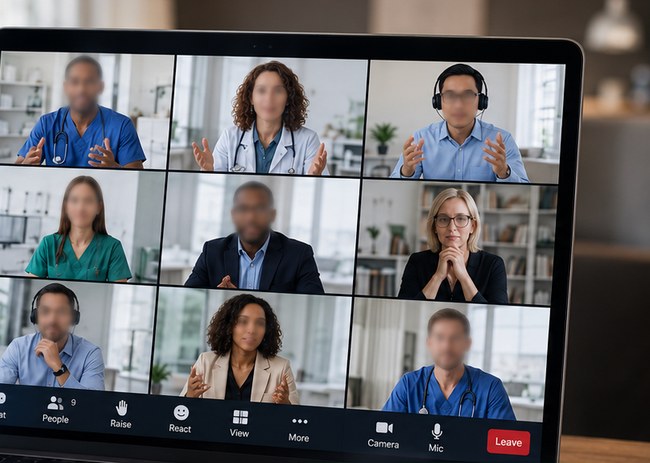
Illustration Posed video-call scene — not a photograph of a specific CIN meeting. The Clinical Innovation Network itself is a real, active SDHA programme. |
|||||||||||
|
|||||||||||
|
🌐 The World in One Minute
Before you leave, five things worth watching:
|
|||||||||||
|
☕ Before You Go
Perhaps the most important sentence in this first edition is this: the future of healthcare will not be determined by technology alone. It will be determined by the relationship between technology and trust, innovation and safety, data and dignity, efficiency and humanity, global ambition and local culture, automation and professional judgement. That is why we called this publication The Health Mosaic. No single tile tells the whole story. See you next week. |
|||||||||||
|
|||||||||||
|
Share the Mosaic
Enjoyed this edition? Forward it to someone working in healthcare, technology, AI, the NHS, patient safety, HR, Occupational Health, research, policy or innovation.
|
|||||||||||
|
Editorial areas: Global Health · NHS · Digital Health · AI · Robotics · Clinical Safety · Regulation · Workforce · Neurodiversity · Culture · Health Equity · Innovation · Research · Business of Health Disclaimer: The Health Mosaic is an independent educational and informational publication produced by Sapphire Digital Health Advisory Ltd. Content is provided for general information and discussion and does not constitute medical, clinical, legal, regulatory, financial or investment advice. References to particular organisations, technologies or products do not necessarily constitute endorsement. Healthcare organisations and professionals should undertake appropriate clinical, regulatory, technical, information-governance, procurement and legal assessment relevant to their circumstances before acting upon information discussed in this publication. Healthcare technology, regulation and policy change rapidly; information is presented according to the best available sources at the time of publication. Some images in this edition are AI-generated or illustrative concept visualizations, clearly captioned as such — they do not depict real events, patients or products. You are receiving this publication because you subscribed through an SDHA subscription route. We want The Health Mosaic to be useful — not another unwanted email. Manage preferences | Unsubscribe | Privacy Policy | Contact us © 2026 Sapphire Digital Health Advisory Ltd. All rights reserved. |
|||||||||||


Related Articles


About Us
The infrastructure layer that makes UK and global digital health work. Clinical authority meets digital innovation.